
Latest Posts
-
Mine as Well, Might as Well, or Mind as Well: Which Is Correct?

People often get confused about mine as well, might as well, and mind as well because the phrases sound similar in speech, and autocorrect does not always catch the mistake. In everyday writing, speaking, exams, emails, and professional communication, this matters because choosing the wrong phrase can make your English look careless or confusing. The…
-
To Fast or Too Fast: Which Is Correct?

People often get confused between to fast and too fast because the two phrases sound similar when spoken, and both include the word fast. But they mean very different things. This matters in everyday writing, speaking, exams, and professional communication because using the wrong form can change your meaning completely. In English, one tiny word…
-
Company-Wide or Companywide: Which Spelling Is Correct?

People often get confused about company-wide and companywide because both look natural, both are used in real writing, and both seem to mean the same thing. The confusion matters in everyday writing, speaking, exams, and professional communication because business English often values clarity and consistency. A small spelling choice can make a report, email, policy,…
-
What Are Staccato Sentences?
People often get confused about staccato sentences because the word staccato comes from music, but the writing effect appears in grammar and style. In everyday writing, speaking, exams, and professional communication, this matters because sentence length changes the rhythm of your message. A paragraph full of short, clipped lines can sound urgent, dramatic, or sharp,…
-
Unselect or Deselect: Which Word Is Correct?

People often get stuck on unselect versus deselect because both seem to describe the same action: removing a choice. In everyday computer use, that action is obvious, but in writing, exams, manuals, and professional communication, the wording matters. Major dictionaries such as Merriam-Webster and Oxford list deselect as the standard term for removing a selection…
-
25+ Idioms for Death 2026

Death is one of the most sensitive topics in any language, and English has many idioms and euphemisms that people use to talk about it with respect, humor, poetry, or distance. Learning idioms for death helps English learners understand books, movies, news articles, and everyday conversations more naturally. It also helps you speak with more…
-
25+ Idioms for Depression 2026
Talking about sadness, low mood, and emotional heaviness is an important part of English communication. Many speakers use idioms for depression and related expressions to describe feeling mentally low, overwhelmed, hopeless, or emotionally drained. Learning these phrases helps English learners understand conversations, movies, books, and everyday speech more naturally. It can also help you express…
-
25+ Idioms for Different 2026

Being able to talk about differences clearly is an important part of natural English. We often need to compare people, things, ideas, and situations in everyday life, school, and work. Learning idioms for different helps English learners sound more fluent, express contrast more vividly, and understand native speakers better. It also makes your English more…
-
25+ Idioms for Difficult 2026

Difficult situations are a normal part of life, and English has many vivid idioms to describe them. Learning idioms for difficult can help English learners express challenges, stress, and obstacles in a more natural way. These expressions also make it easier to understand native speakers in conversations, books, movies, and workplace discussions. In real life,…
-
25+ Idioms for Dogs 2026

Dogs are a big part of English culture, so it is no surprise that many everyday English idioms mention them. Learning idioms for dogs can help English learners understand native speakers more naturally, especially in conversations, movies, books, and workplace chat. These expressions often describe loyalty, laziness, luck, trouble, or strong emotion in a vivid…
-
As Evidenced By or As Evident By: Which Is Correct?
People often get confused about as evidenced by and as evident by because both phrases sound formal and both seem to express proof or visible signs. In everyday writing, speaking, exams, and professional communication, that kind of confusion matters because a small grammar mistake can make a sentence sound awkward or less polished. The good…
-
Is “Hence Why” Grammatically Correct?
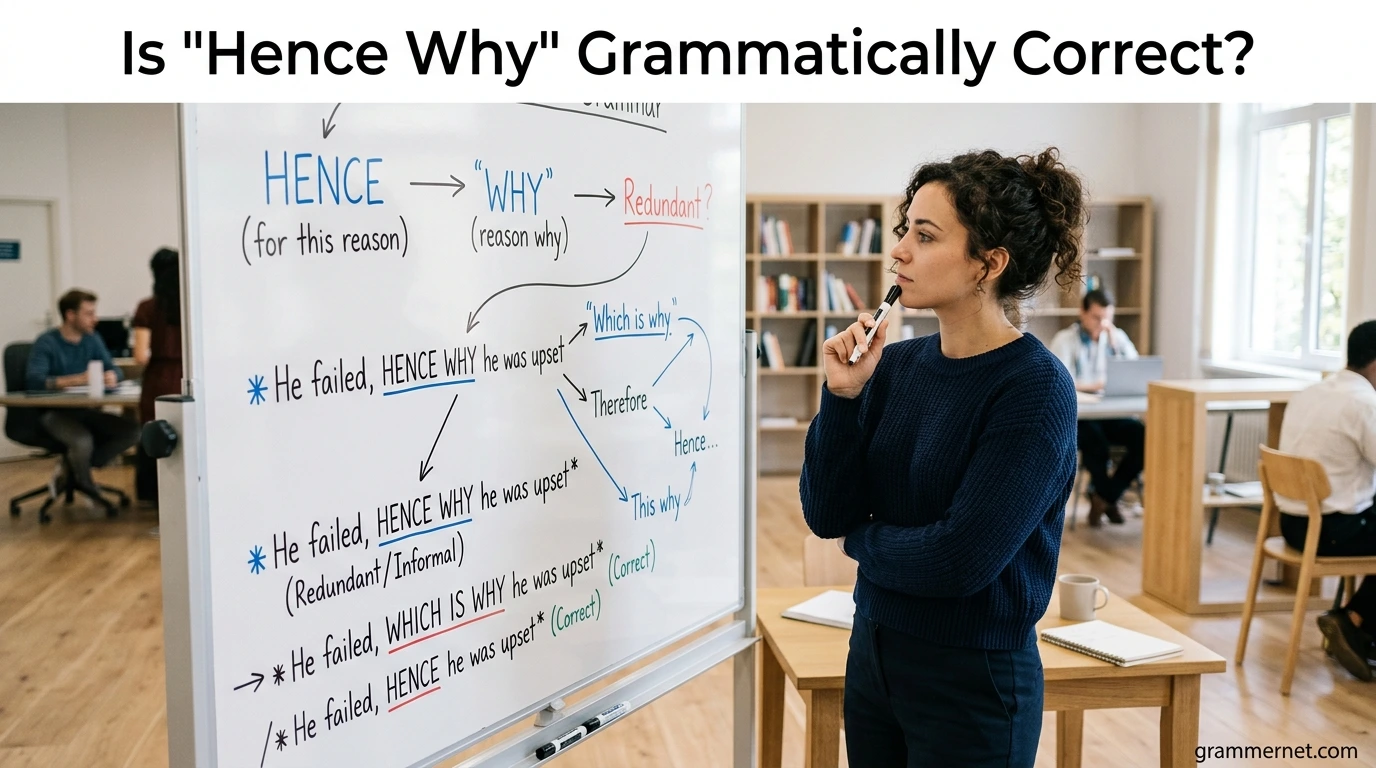
People often ask whether “hence why” is grammatically correct because the phrase appears in books, articles, spoken English, and casual writing. It sounds logical to many speakers, but it also sounds awkward to others. That is why learners, students, and even native speakers get unsure about it. This matters in everyday writing, speaking, exams, and…
-
Impatient vs Inpatient: What Is the Difference?
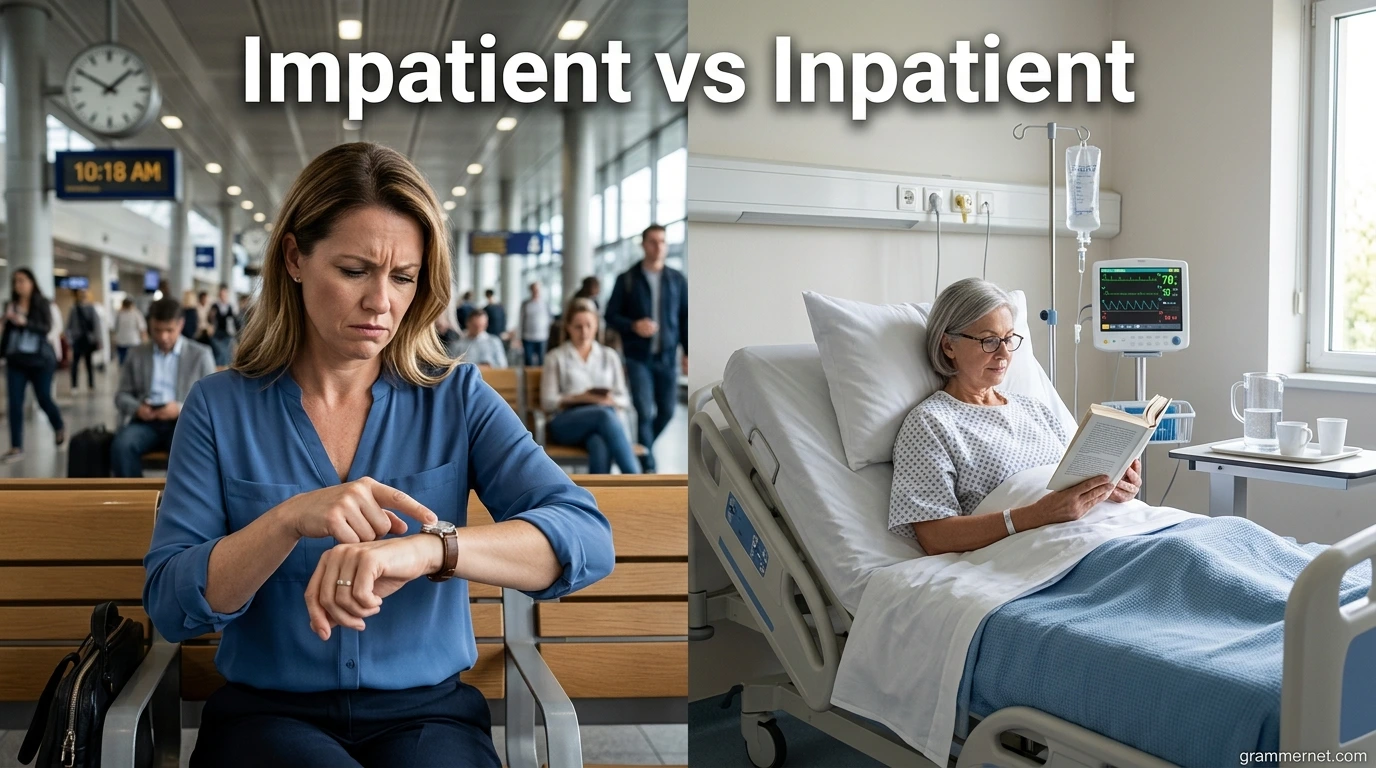
People often confuse impatient and inpatient because the words look almost identical, and only one small letter separates them. That tiny spelling difference can create big confusion in writing, speaking, exams, and professional communication. The problem is even more noticeable because impatient is a common everyday word, while inpatient is used mainly in medical and…
-
25+ Idioms for Dreams 2026

Dreams are one of the most interesting parts of human language because they can mean both the things we see while sleeping and the goals we hope to achieve in life. Learning idioms for dreams helps English learners express hopes, ambitions, sleep-related experiences, and imagination in a more natural and colorful way. These idioms are…
-
25+ Idioms for Dying 2026

Death is a universal part of life, and English contains many idioms that people use to discuss it in indirect, respectful, humorous, or literary ways. Learning idioms for dying helps English learners understand movies, books, news articles, historical texts, and everyday conversations where speakers often avoid using the direct word “die.” These idioms enrich your…